If you’re in the construction business, you’ve probably heard the term egg laying machine thrown around — and for good reason. This innovative piece of equipment is transforming how concrete blocks are produced across India and the world. Whether you’re a small contractor or a large-scale builder, understanding this machine could be the single best investment decision you make this year.
In this guide, we’ll cover everything you need to know — what an egg laying machine is, how it works, what types are available, how much it costs in India, and why it’s rapidly becoming the preferred choice for builders everywhere.
What Is an Egg Laying Machine?
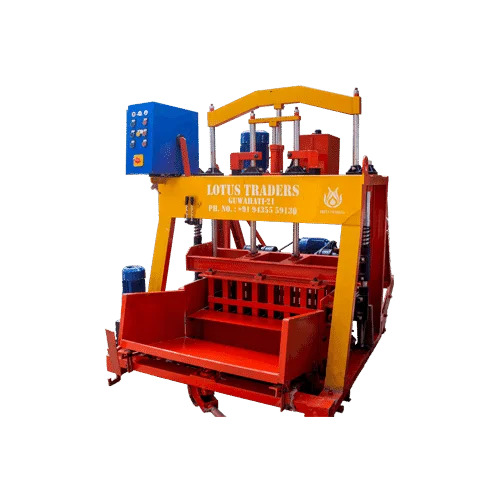
An egg laying machine, also known as an egg laying block making machine, is a mobile hydraulic concrete block manufacturing machine mounted on wheels. It “lays” concrete blocks directly onto a flat concrete floor, then moves forward to the next position — much like a hen moving across her nest laying eggs. That’s exactly where the name comes from.
The mold and ram are moved by hydraulic cylinders, which creates a much stronger block, and the block maker can use less cement. Any type of block can be produced with consistent quality by affixing the desired mold.
This pallet-free production method is what makes the egg laying machine truly revolutionary. Traditional block-making machines require expensive wooden or steel pallets to hold each block as it sets. The egg laying design eliminates this entirely, dramatically reducing operating costs.
How Does an Egg Laying Machine Work?
The working process is straightforward and efficient:
- Preparation — Cement, sand, and water are mixed into a concrete mixture.
- Loading — The mixture is loaded into the machine’s drum or hopper.
- Moulding — The mold shapes the concrete into bricks or blocks.
- Compression — Hydraulic pressure compacts the concrete inside the molds.
- Vibration — High-frequency vibrators remove air bubbles and ensure uniform density.
- Laying — The machine moves forward, leaving the freshly formed blocks on the ground.
- Curing — The blocks are stacked and left to cure before packaging.
Egg laying concrete block making machines are very efficient and produce bricks or blocks quickly. They come in different sizes and can make various sizes and shapes to fit your construction needs.
Types of Egg Laying Machines
Understanding the different types available will help you choose the right machine for your operation.
1. Manual Egg Laying Machine
The manual variant is the most affordable entry point. This type of manually operated concrete block making machine, after laying a block on the concrete floor, is moved to the next laying position by manual force. It typically runs on diesel, making it ideal for remote sites without electricity.
Best for: Small contractors, rural projects, tight budgets.
2. Semi-Automatic Egg Laying Machine
The semi-automatic model strikes a balance between cost and efficiency. It features hydraulic operation for the mold and ram, while some movement functions may still be manual. Egg Laying Type Semi-Automatic Block Making Machine applies a pressure of 2000 psi and is equipped with a high-frequency vibrator for high compaction and a double movement motor for easy movement.
Best for: Medium-scale contractors, urban construction projects.
3. Automatic Egg Laying Machine
The fully automatic version features auto-forward, auto-reverse, and auto-feed capabilities. Advantages include forward and reverse auto drive, left and right manual drive, auto feeder, driver seat, and two heavy vibrators.
Best for: Large-scale production units, commercial construction.
Key Features to Look for in an Egg Laying Machine
When evaluating any egg laying machine, keep these critical features in mind:
Vibrator System — A dual or triple vibrator system ensures uniform compaction and higher block density. The vibration method of simultaneous vibration produces blocks of good quality, large density, and high strength.
Mold Quality — The best molds use precise wire-cutting technology to reduce error and carburizing heat treatment technology to prolong service life, typically made from the best 16# manganese steel.
Mobility — Look for machines with sturdy wheels and auto-drive capability so you can relocate production easily across a job site.
Hydraulic System — A high-quality hydraulic system (like Yuken components) ensures consistent pressure, reduces maintenance needs, and extends machine lifespan.
No Pallet Required — This is the defining advantage. Eliminating pallets can save you anywhere from ₹4,000 to ₹20,000 annually in pallet costs alone.
Egg Laying Machine Price in India
One of the most common questions buyers ask is: what is the egg laying machine price in India? The answer depends on automation level, capacity, brand, and location.
Here’s a general price breakdown based on current market data:
| Machine Type | Price Range (INR) |
|---|---|
| Manual Egg Laying Machine | ₹1,65,000 – ₹2,10,000 |
| Semi-Automatic Egg Laying Machine | ₹1,95,000 – ₹2,50,000 |
| Fully Automatic Egg Laying Machine | ₹2,15,000 – ₹3,50,000+ |
| Full Set (Machine + Mixer + Trolley + Die) | ₹2,88,000 – ₹3,52,000 |
Egg laying block making machines are available from verified manufacturers across India, with models ranging from semi-automatic to fully automatic configurations, and prices starting around ₹1,95,000 per piece.
You can also explore listings and compare multiple supplier quotes on platforms like to find the best deal for your specific requirements.
What Affects the Price?
Several factors impact the final cost of an egg laying machine in India:
- Automation grade — Fully automatic machines cost more upfront but reduce labor costs significantly.
- Production capacity — Machines with higher output per hour command a premium.
- Brand and manufacturer reputation — Established manufacturers from Gujarat, Tamil Nadu, and Maharashtra tend to offer better quality assurance.
- Location — Metro-based manufacturers may price differently from regional ones.
- Included accessories — Some packages bundle mixers, molds, and trolleys, offering better overall value.
Advantages of Using an Egg Laying Machine
The surge in popularity of the egg laying machine across India is not accidental. Here’s why builders, contractors, and entrepreneurs love this machine:
✅ No Pallets Needed This single advantage eliminates a major recurring expense. Traditional machines require steel or wooden pallets for every single block cast. With an egg laying machine, blocks are laid directly onto the cured floor.
✅ High Mobility By producing bricks at places of construction, this machinery may be transported there for less money, enabling on-site production that reduces logistics costs dramatically.
✅ Versatile Block Production A mobile block laying machine can produce different hollow blocks and solid blocks by changing the mold, and it is easy to change the mold. This means one machine can handle hollow blocks, solid blocks, interlocking blocks, and even pavers.
✅ Minimal Labor Requirement The machine is simple to operate and requires only two workers to produce the blocks. This significantly cuts your labor cost compared to traditional manufacturing setups.
✅ Superior Block Quality Hydraulic pressing at consistent pressures — often 2000 psi or more — combined with high-frequency vibration, produces denser, stronger blocks with fewer defects.
✅ Low Maintenance Costs Quality egg laying machines built with heavy-duty manganese steel and reliable hydraulic components are designed for long-term durability with minimal downtime.
Egg Laying Machine vs. Traditional Block Making Machine
| Feature | Egg Laying Machine | Traditional Machine |
|---|---|---|
| Pallet Required | No | Yes |
| Mobility | High (on wheels) | Low (stationary) |
| Labor Required | 2 workers | 3–5 workers |
| Setup Cost | Lower | Higher |
| On-site Production | Yes | No |
| Block Types | Multiple | Limited |
The egg laying model clearly wins for flexibility and cost-efficiency, particularly for project-based construction work. For a detailed overview of block machine types, refer to resources like, which explains the hydraulic egg laying principle in depth.
What Blocks Can an Egg Laying Machine Produce?
A major selling point is versatility. With mold changes, a single egg laying machine can produce:
- Hollow Blocks (most common — lightweight, great for walls)
- Solid Blocks (higher density, used in load-bearing structures)
- Interlocking Blocks (for roads and pathways)
- Paver Blocks (decorative and functional outdoor use)
- Corner Blocks (specialty construction use)
This versatility means you can adapt your production to meet different client requirements without investing in multiple machines.
How to Choose the Right Egg Laying Machine for Your Business
Here are practical tips to guide your purchase decision:
Step 1: Assess your daily production target. A manual machine producing 1,500–2,000 blocks per day suits small operations. For 5,000+ blocks daily, look at semi-automatic or automatic models.
Step 2: Evaluate your site conditions. Egg laying machines require a flat, cured concrete surface to operate. Ensure your site meets this requirement before investing.
Step 3: Check mold compatibility. Confirm the machine supports the block sizes and types you intend to produce. Ask the manufacturer for a mold catalogue.
Step 4: Compare after-sales support. A reliable manufacturer should provide installation support, spare parts, and technical assistance. Look for at least a 1-year warranty.
Step 5: Request a live demo. Before finalizing any purchase, ask for a working demonstration to see the actual output quality and operational efficiency.
Why Buy From a Trusted Manufacturer?
At Brick Making Machinery, we back every egg laying machine with advanced manufacturing infrastructure, rigorous quality testing, and dedicated after-sales support. Our production facility is equipped with the latest tools to meet exact customer specifications within committed timelines. Whether you need a manual egg laying machine for a small project or a fully automatic egg laying block making machine for large-scale production, our team helps you find the perfect solution.
Our quality control division uses the latest testing equipment to ensure every machine that leaves our facility meets the highest performance and durability standards.
Conclusion: Is an Egg Laying Machine Right for You?
If you’re involved in construction — whether as a contractor, builder, or material supplier — an egg laying machine is one of the most cost-effective investments available in the market today. It eliminates pallet costs, reduces labor requirements, enables on-site block production, and delivers consistent, high-quality output across multiple block types.
With egg laying machine prices in India ranging from ₹1.65 lakh for manual models to ₹3.5 lakh and beyond for fully automatic setups, there’s an option for every budget and every scale of operation.