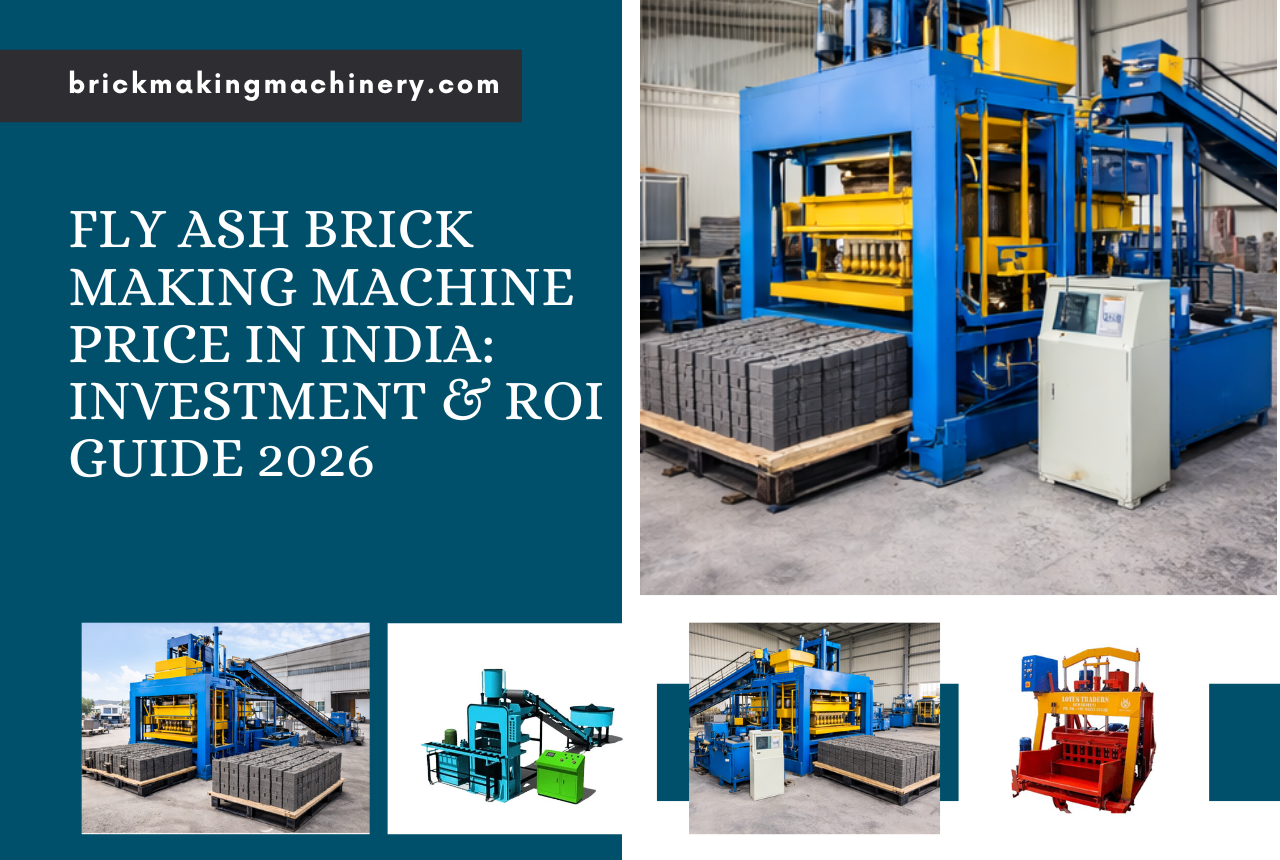
India’s building materials market reached USD 44.4 billion in 2025 and is projected to grow to USD 64.5 billion by 2034, driven by unprecedented infrastructure development, urbanization, and government-backed construction initiatives. At the heart of this construction revolution lies one critical component: bricks.
Whether you’re a seasoned contractor, an aspiring entrepreneur, or a construction company looking to expand production capacity, choosing the right fly ash brick making machine can determine your business success. The Indian construction industry is expected to grow at a compound annual growth rate (CAGR) of 15.7% between 2020 and 2025, creating massive demand for efficient, cost-effective brick production equipment.
In this comprehensive guide, we’ll explore the top fly ash brick making machines available in India, help you understand pricing structures, evaluate production capacities, and make informed investment decisions that align with your business goals and budget.
Understanding Fly Ash Brick Making Technology
Before diving into specific machines, it’s important to understand what makes fly ash brick making machinery revolutionary for India’s construction sector.
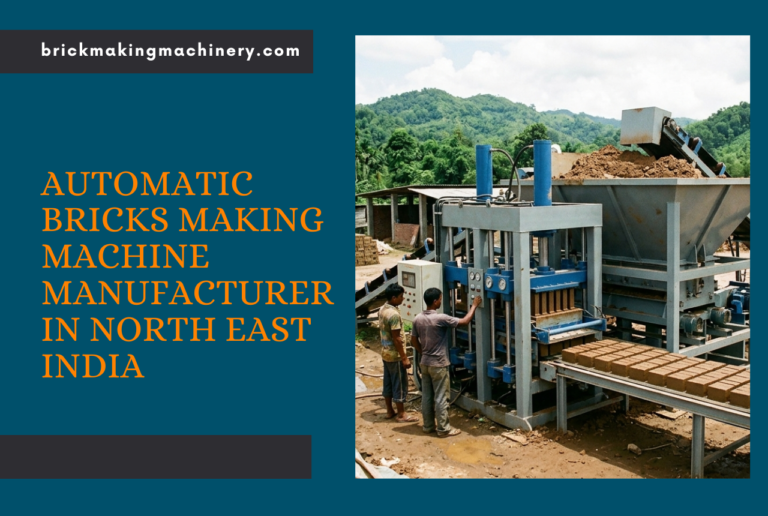
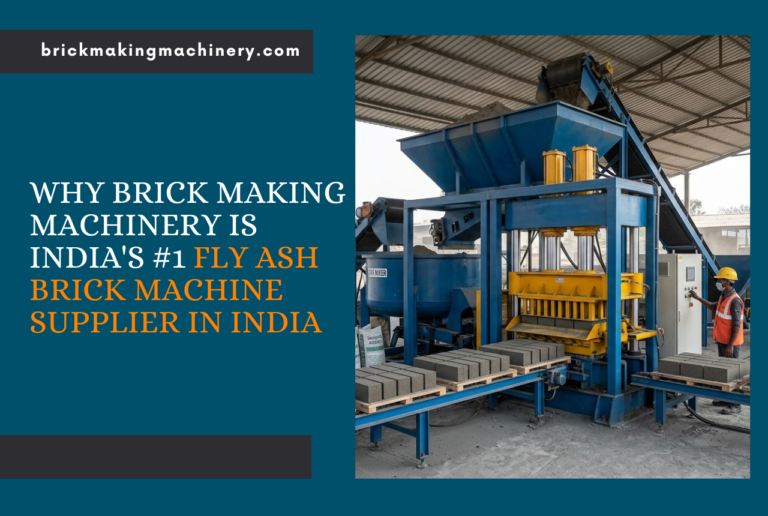
A Fly Ash Brick Making Machine is an automated or semi-automated machine used to produce fly ash bricks. They mix fly ash, a byproduct of coal combustion in power plants, with other materials like cement, sand, and lime to create durable bricks.
The Production Process:
Raw Material Feeding: Fly ash, cement, sand, and water are fed into the hopper. Mixing: The machine blends the materials to create a consistent mixture. Molding: They compress the mixture into brick molds under high pressure. Curing: They cure the bricks using steam or water to enhance their strength and durability.
Why Fly Ash Bricks Are Gaining Market Share:
Fly ash bricks offer a sustainable, Eco-friendly, durable, and cost-effective solution to meet the high demand for bricks in India. These eco-friendly alternatives to traditional clay bricks provide:
- Environmental Benefits: Reduces clay mining and conserves natural resources
- Superior Strength: Higher compressive strength compared to traditional bricks
- Cost Efficiency: Lower production costs and material expenses
- Thermal Insulation: Better heat resistance for energy-efficient buildings
- Uniform Quality: Consistent dimensions and strength throughout production
Types of Brick Making Machines: Choosing Your Production Level
You can choose from 5 machine types based on your budget and production needs. Manual machines make 1,000-3,000 bricks daily, while heavy-duty machines produce up to 200,000.
1. Manual Brick Making Machines
Manual machines make 1,000-3,000 fly ash bricks daily using hand operation with basic hydraulics.
Ideal For:
- Small-scale entrepreneurs
- Rural brick manufacturing units
- Limited initial investment (₹3-5 lakhs)
- Local construction material supply
2. Semi-Automatic Brick Making Machines
Semi-automatic machines produce 3,000-9,000 bricks per day with partial automation and PLC control.
Ideal For:
- Growing brick manufacturing businesses
- Medium-scale construction contractors
- Investment range: ₹5-8 lakhs
- Regional distribution networks
3. Fully Automatic Brick Making Machines
Fully automatic machines manufacture 15,000-60,000 bricks daily using complete automation with HMI and conveyor systems.
Ideal For:
- Large-scale brick manufacturing plants
- Commercial construction companies
- Investment range: ₹12-25 lakhs
- Multi-state supply operations
4. Heavy-Duty Industrial Machines
These are high-capacity industrial units with a 50,000-200,000 bricks per day capacity. You get robust construction with advanced hydraulic systems.
Ideal For:
- Major infrastructure projects
- Industrial-scale brick production
- Investment range: ₹25 lakhs – ₹1 crore+
- National-level supply chains
India’s Construction Boom: Why Now Is the Right Time to Invest
The timing has never been better for investing in brick making machinery in India. Multiple converging factors are creating unprecedented demand:
Infrastructure Development Surge
Cement demand in India is projected to remain robust, with a CAGR of 7-8% over FY25-27, according to JM Financial. Road construction is expected to continue its current momentum, with India adding up to 13,000 kilometres in the year ending March 2025.
In the Union Budget 2025-26, capital investment outlay for infrastructure has been increased to Rs. 11.21 lakh crore (US$ 128.64 billion), which would be 3.1% of GDP.
Housing and Real Estate Growth
Housing and urban development remain key priorities, with the Union Housing and Urban Affairs Ministry’s budget for FY26 increased by 18% to Rs. 96,777 crore (US$ 11.07 billion) and the PM Awas Yojana (Grameen) targeting two crore additional houses in the next five years.
GST 2.0 is expected to reduce construction costs by 3.5-4.5%, potentially lowering housing prices by 5-8% and boosting demand, especially in the affordable and mid-segment markets.
Manufacturing Sector Expansion
According to a report by the Federation of Indian Chambers of Commerce and Industry (FICCI), the Indian manufacturing sector is expected to grow at a CAGR of 16.7% between 2021 and 2026, which is expected to further drive the demand for bricks.
Market Size Projections
As per Invest India and IBEF, the construction Industry in India is expected to become the 3rd largest construction market globally and to reach USD 1.4 trillion by 2025. Moreover, Real Estate Industry in India is expected to reach USD 1 trillion by 2030.
This construction boom translates directly into sustained demand for quality bricks, making brick making machinery a strategic investment for entrepreneurs and established businesses alike.
Key Features to Look for in Brick Making Machines
When evaluating fly ash brick making machines, prioritize these critical features:
1. Production Capacity and Efficiency
KHM144H – Automatic Fly Ash Brick Making Machine is manufacture with Hydraulic Technology having Production Capacity of 12 Bricks/Stroke | 2880/Hr.
Look for machines that clearly specify:
- Bricks per stroke
- Hourly production rate
- Daily production capacity (8-hour shift)
- Actual vs. theoretical output
2. Hydraulic System Quality
These machines integrate hydraulic pressure systems and programmable logic controllers (PLC) to automate the entire production process, ensuring consistent quality and high output.
Premium hydraulic systems ensure:
- Consistent pressure application
- Uniform brick density
- Longer equipment lifespan
- Reduced maintenance requirements
3. Technology and Automation Level
Top manufacturers offer German technology and international quality standards.
Modern machines should include:
- PLC (Programmable Logic Controller) systems
- HMI (Human Machine Interface) displays
- Automated material feeding systems
- Quality control sensors
4. Raw Material Flexibility
The raw materials you need to make fly ash bricks are fly ash, cement, sand, and water. Fly ash makes up about 60-70% of your mix. You add 10-12% cement as a binding agent. Sand fills about 20-25% of your mixture.
Choose machines that can work with various mix ratios and material types to adapt to local availability and cost fluctuations.
5. Brick Size Versatility
Brick Size: 230mm X 110mm X 75mm (or as per your requirement).
The best machines offer mold flexibility to produce:
- Standard building bricks
- Hollow blocks
- Solid concrete blocks
- Paver blocks
- Custom sizes for specific projects
6. Power Source Options
The machine can operat 3 phase electricity / single phase electricity / diesel engine.
This flexibility is crucial for:
- Areas with unreliable power supply
- Remote manufacturing locations
- Operational cost optimization
- Business continuity
Investment Analysis: Pricing and ROI Expectations
Understanding the complete financial picture is essential for making smart investment decisions.
Machine Price Ranges (2026 Market Rates)
- Manual Machines: ₹3,00,000 – ₹5,00,000
- Semi-Automatic Machines: ₹5,00,000 – ₹8,00,000
- Fully Automatic Machines: ₹12,00,000 – ₹25,00,000
- Heavy-Duty Industrial Units: ₹25,00,000 – ₹1,00,00,000+
Complete Setup Investment
You need about 2,000 to 5,000 square feet to set up your fly ash brick making operation. This includes space for your machine, raw material storage, finished brick stacking, and curing areas.
Your total investment includes:
- Brick making machine
- Land (purchase or lease)
- Shed construction
- Material handling equipment
- Curing systems
- Initial raw material stock
- Working capital
Return on Investment Timeline
You can usually recover your investment in a fly ash brick making machine within 18–24 months. Your actual ROI depends on local demand, production capacity, and operating costs. With steady orders and efficient production, many business owners see profits within the first year.
Profit Calculation Example (Semi-Automatic Machine)
Let’s break down realistic profitability for a 5,000 bricks/day operation:
Production Metrics:
- Daily production: 5,000 bricks
- Working days/month: 26 days
- Monthly production: 1,30,000 bricks
Revenue:
- Average selling price: ₹6 per brick
- Monthly revenue: ₹7,80,000
Operating Costs:
- Raw materials (fly ash, cement, sand): ₹3,25,000
- Labor (5 workers): ₹75,000
- Power/fuel: ₹35,000
- Maintenance: ₹15,000
- Transportation: ₹30,000
- Total costs: ₹4,80,000
Monthly Profit: ₹3,00,000 Annual Profit: ₹36,00,000
With an initial investment of ₹8,00,000 (machine) + ₹7,00,000 (setup) = ₹15,00,000, your payback period would be approximately 5 months under optimal conditions.
These calculations demonstrate why brick making machinery represents such an attractive investment opportunity, especially given India’s sustained construction growth.
Space Requirements and Plant Setup
Proper facility planning is critical for efficient operations and future expansion.
Minimum Space Requirements:
You need about 2,000 to 5,000 square feet to set up your fly ash brick making operation. This includes space for your machine, raw material storage, finished brick stacking, and curing areas. You’ll also need room for workers to move around safely.
Optimal Layout Design:
- Production Area (40% of space)
- Machine installation zone
- Material feeding systems
- Quality control station
- Pallet handling area
- Raw Material Storage (25% of space)
- Covered fly ash storage
- Cement storage (moisture-protected)
- Sand storage bays
- Water tanks
- Curing and Drying Area (25% of space)
- Stacking racks
- Curing chambers
- Moisture control systems
- Ventilation equipment
- Finished Goods Storage (10% of space)
- Organized stacking
- Loading zone
- Quality-segregated areas
- Delivery staging
Infrastructure Essentials:
- Power Supply: Three-phase connection (for electric machines) or diesel generator backup
- Water Supply: Reliable source with adequate pressure for mixing and curing
- Drainage: Proper waste water management system
- Loading Facilities: Adequate space for trucks and material handling equipment
- Office Space: Administrative area with basic amenities
Quality Standards and Certifications
In India’s competitive construction materials market, quality certification can differentiate your business.
Hardic Engineering is known as top Fly Ash brick making machine manufacturers in India, providing highly reliable, creative, and affordable production technologies. AN ISO 9001:2008 CERTIFIED COMPANY.
Essential Quality Standards:
- ISO 9001 Certification: Quality management systems
- IS 12894 Compliance: Indian Standard for pulverized fuel ash-lime bricks
- CE Certification: For imported or export-oriented equipment
- BIS Certification: Bureau of Indian Standards approval
What Quality Certification Means for Your Business:
- Higher selling prices for certified products
- Access to government and large-scale contracts
- Improved brand reputation
- Consistent product quality
- Reduced rejection rates
- Better financing options
Maintenance and After-Sales Support
Long-term equipment performance depends heavily on maintenance practices and supplier support.
Regular Maintenance Requirements:
- Daily cleaning and lubrication
- Weekly hydraulic system checks
- Monthly component inspections
- Quarterly comprehensive servicing
- Annual overhauls
After-Sales Support Essentials:
Services after-sale provided by the company are up to the mark. Happy client experience!
Look for suppliers offering:
- Installation and commissioning support
- Operator training programs
- Spare parts availability
- Technical helpline access
- Periodic maintenance contracts
- Warranty coverage (minimum 1-3 years)
Common Issues and Solutions:
| Issue | Cause | Solution |
|---|---|---|
| Uneven brick density | Inconsistent pressure | Hydraulic system calibration |
| Frequent breakdowns | Poor maintenance | Scheduled servicing program |
| Low production output | Operator error | Proper training and supervision |
| High power consumption | Inefficient operation | Equipment optimization |
Government Incentives and Financing Options
The Indian government actively supports sustainable construction materials manufacturing through various schemes and subsidies.
Available Government Support:
- PMEGP Scheme (Prime Minister’s Employment Generation Programme)
- Subsidy: 15-35% of project cost
- Maximum subsidy: ₹25 lakhs for manufacturing
- For new entrepreneurs and existing units
- CLCSS Scheme (Credit Linked Capital Subsidy Scheme)
- 15% capital subsidy on eligible machinery
- Up to ₹15 lakhs subsidy
- For technology upgradation
- State Government Incentives
- VAT/GST exemptions (varies by state)
- Electricity tariff subsidies
- Land allotment at concessional rates
- Interest subsidies on loans
Financing Options:
- Bank Loans: 70-80% financing at 9-12% interest
- NBFC Financing: Faster approval, slightly higher rates
- Equipment Leasing: Lower upfront costs, tax benefits
- Mudra Loans: Up to ₹10 lakhs for micro-enterprises
Environmental Benefits and Sustainability
Fly ash brick production aligns perfectly with India’s environmental goals and green building initiatives.
Environmental Advantages:
Fly ash bricks are made from industrial waste, which reduces the need for clay mining and helps to conserve natural resources.
- Waste Utilization: Uses industrial by-product from power plants
- Reduced Carbon Footprint: Lower CO2 emissions than traditional brick kilns
- Energy Efficiency: No firing required, reducing fuel consumption
- Water Conservation: Minimal water usage in production
- Land Preservation: Eliminates top-soil excavation for clay
Green Building Compliance:
Fly ash bricks contribute to:
- LEED certification points
- IGBC (Indian Green Building Council) ratings
- GRIHA (Green Rating for Integrated Habitat Assessment) compliance
- Energy-efficient building designs
Market Advantage:
Growing environmental consciousness means:
- Premium pricing for eco-friendly products
- Government project preferences
- Corporate construction mandates
- Export opportunities to green-conscious markets
Success Stories: Real Business Outcomes
Real-world success stories demonstrate the viability of brick making machinery investments.
Superb quality at an affordable price! I have been using the mac 2500 with a batching plant model and have generated very good profits from my business.
Case Study 1: Small-Scale Success
A rural entrepreneur in Madhya Pradesh started with a semi-automatic machine producing 4,000 bricks daily. Within 18 months, he:
- Recovered initial investment of ₹6.5 lakhs
- Expanded to two machines
- Employed 12 local workers
- Supplies to 50+ construction sites monthly
Case Study 2: Medium-Scale Expansion
A construction contractor in Gujarat invested in a fully automatic plant producing 40,000 bricks daily:
- Generated ₹18 lakhs monthly profit
- Reduced dependence on external suppliers
- Cut brick procurement costs by 35%
- Created stable employment for 25 people
Case Study 3: Large-Scale Operations
We installed a fully automatic plant at Jindal Steel and Power Limited (JSPL) Raigarh in collaboration with FRIMA GmbH to produce approx. 2,00,000 bricks per day.
Technology Trends Shaping the Industry
The brick making machinery sector is evolving rapidly with technological innovations.
Current Technology Trends:
- IoT Integration: Remote monitoring and predictive maintenance
- Automated Quality Control: AI-powered defect detection
- Energy Optimization: Smart power management systems
- Modular Designs: Easily scalable production lines
- Advanced Materials: Enhanced durability and performance
Lontto Machinery leads global fly ash brick machine manufacturing with over 30 years experience. You get CE certified machines with strong vibration and high-pressure technology, producing denser, uniform bricks for cost-effective, eco-friendly production.
Choosing the Right Supplier: What to Look For
Selecting the right machinery supplier is as important as choosing the right machine.
Supplier Evaluation Checklist:
✓ Manufacturing Experience: Minimum 5-10 years in the industry ✓ Customer Base: Established client references and testimonials ✓ Technical Expertise: In-house engineering and R&D capabilities ✓ After-Sales Network: Service centers and spare parts availability ✓ Transparency: Clear pricing, specifications, and terms ✓ Customization: Ability to modify machines for specific needs ✓ Training Programs: Comprehensive operator and maintenance training ✓ Financial Stability: Established company with proven track record
For someone who is starting a new business in the bricks industry, the basic step is checking plant layout. The engineer visited our plant and assisted us in our new setup. Very satisfied by this facility!
Common Mistakes to Avoid When Buying Brick Making Machines
Learn from others’ mistakes to make smarter investment decisions.
Top 10 Buyer Mistakes:
- Choosing Price Over Quality: Cheapest option often costs more long-term
- Ignoring After-Sales Support: No local service = extended downtime
- Underestimating Space Requirements: Cramped operations reduce efficiency
- Skipping Operator Training: Improper operation damages equipment
- Not Verifying Production Claims: Always see live demonstrations
- Overlooking Power Requirements: Inadequate power supply limits capacity
- Neglecting Raw Material Quality: Poor inputs = inferior bricks
- Missing Market Research: Know your local demand before investing
- Inadequate Working Capital: Insufficient cash flow stalls operations
- No Maintenance Plan: Preventive maintenance is cheaper than repairs
Conclusion: Making Your Investment Decision
India’s construction sector is experiencing unprecedented growth, creating extraordinary opportunities for brick manufacturers and entrepreneurs. Indian construction industry to expand in real terms by 8.1% in 2025 and 6.4% in 2026, supported by investments in infrastructure and energy projects.
The fly ash brick making machinery market offers proven technology, sustainable production methods, attractive profit margins, and strong government support. Whether you’re starting small with a manual machine or launching large-scale operations with heavy-duty equipment, success depends on:
Making Informed Choices:
- Understand your production requirements
- Evaluate total costs, not just machine price
- Plan for adequate space and infrastructure
- Prioritize quality and after-sales support
- Select reputable suppliers with proven track records
Strategic Planning:
- Conduct thorough market research
- Secure adequate financing
- Plan for scalability
- Invest in training
- Maintain quality standards
Long-Term Perspective:
- Focus on sustainable practices
- Build strong customer relationships
- Continuously improve operations
- Stay updated with technology
- Adapt to market demands
The brick making machinery investment offers not just business opportunity but also contributes to India’s infrastructure development, environmental sustainability, and employment generation.
Ready to start your brick manufacturing business? Visit https://brickmakingmachinery.com/ to explore comprehensive machinery options, get expert consultation, and access competitive pricing. Our team provides end-to-end support from machine selection through installation, training, and ongoing maintenance.
Need customized solutions? Contact our technical experts to discuss your specific production requirements, space constraints, and budget considerations. We help you design optimal plant layouts and select equipment configurations that maximize your ROI.
Want to see machines in action? Schedule a live demonstration at our facility or visit operational client sites to witness real-world performance, production quality, and operational efficiency.
Start your journey toward profitable brick manufacturing today with proven technology, expert support, and machinery designed for India’s demanding construction market.