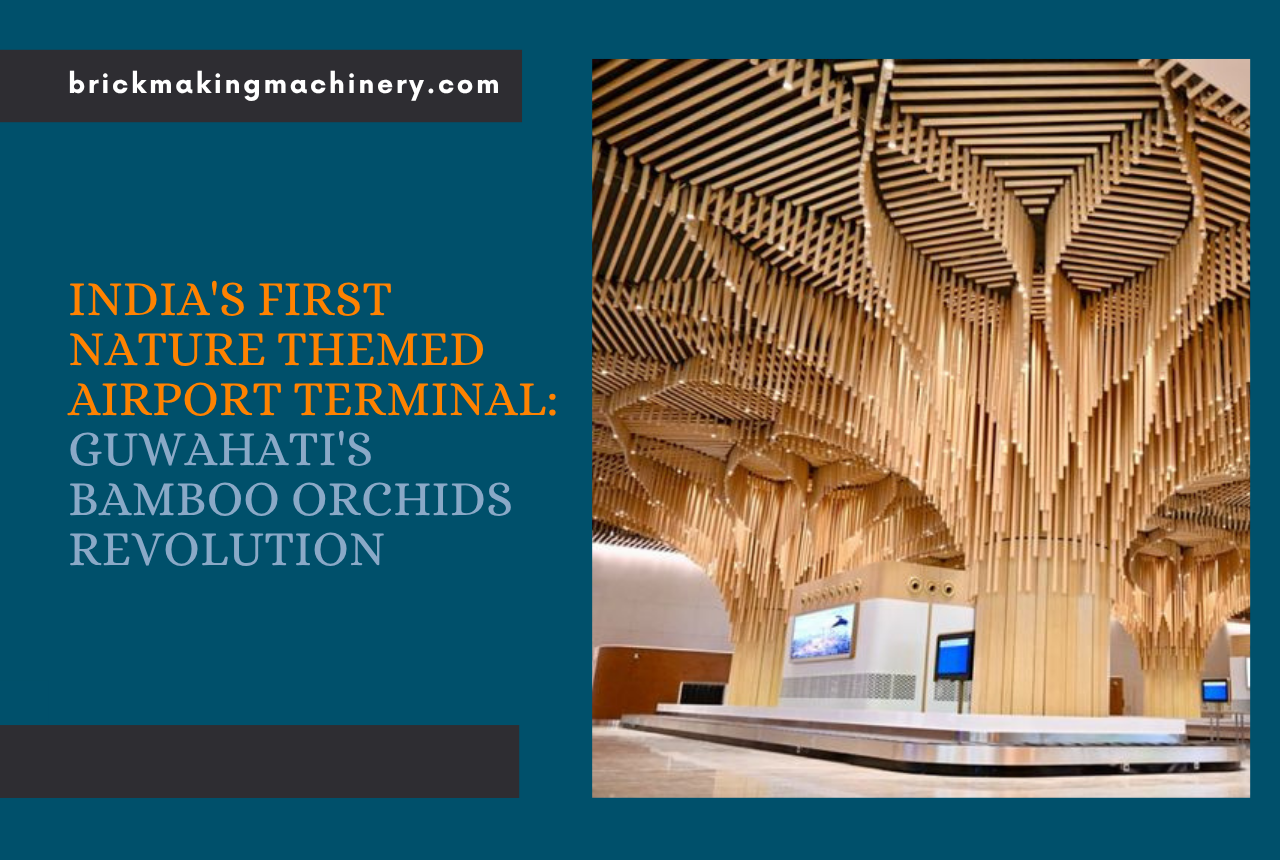
On December 20, 2025, Prime Minister Narendra Modi inaugurated a groundbreaking infrastructure marvel that is set to transform the aviation landscape of Northeast India. The new terminal building at Lokpriya Gopinath Bordoloi International Airport in Guwahati has earned the distinction of being India’s first nature themed airport terminal, marking a historic shift in how airports are designed, experienced, and integrated with regional culture.
This ₹4,000 crore project is more than just an expansion of the new airport in Guwahati. It represents a bold vision where modern infrastructure meets cultural heritage, where sustainability drives design, and where passengers experience the essence of Assam from the moment they step inside. Named “The Bamboo Orchids,” this terminal is inspired by Assam’s rich biodiversity, indigenous bamboo species, and the state flower—the foxtail orchid (kopou phool).
In this comprehensive guide, we explore everything about India’s first nature themed airport terminal, from its architectural brilliance and sustainable design to its operational capacity and impact on regional connectivity.
What Makes Guwahati Airport India’s First Nature Themed Terminal?
The new terminal at Lokpriya Gopinath Bordoloi International Airport is not just another airport building. It is a carefully crafted cultural gateway that celebrates Assam’s ecological and artistic identity. Here’s what sets it apart:
Bamboo-Inspired Architecture
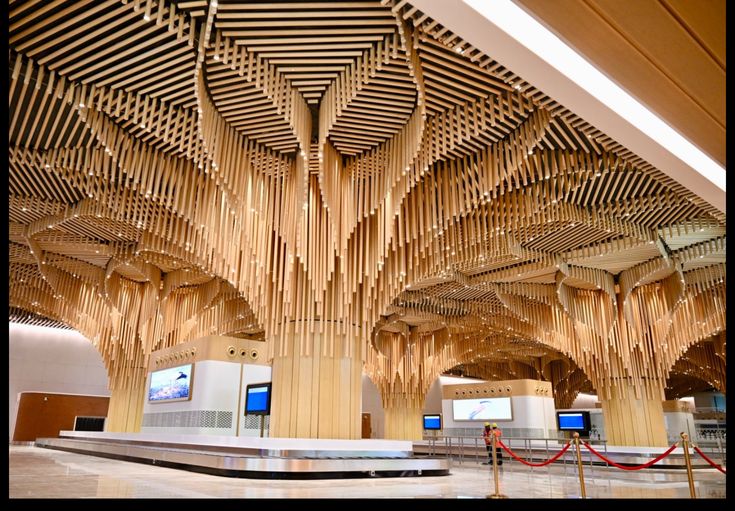
The terminal’s design draws deep inspiration from Indian bamboo species, particularly Bholuka bamboo from Assam and Apatani bamboo from Arunachal Pradesh. Approximately 140 metric tonnes of locally sourced bamboo from the Northeast have been used throughout the terminal, making it one of India’s most prominent examples of sustainable airport construction. Bamboo is not only a renewable material but also a symbol of strength, flexibility, and cultural pride in the region.
Orchid-Themed Design Elements
Assam is home to over 600 species of native orchids. The terminal celebrates this biodiversity through 57 distinctive columns designed to resemble bouquets of the foxtail orchid. These columns adorn the departure and arrival areas, creating a visually stunning environment that reflects the delicate beauty and resilience of the region.
The Sky Forest Experience
One of the most unique features of India’s first nature themed airport terminal is the “Sky Forest”—an immersive indoor green ecosystem housing nearly one lakh plants from 100 species of local flora. Arriving passengers pass through this lush green zone, experiencing a forest-like ambience that provides a serene transition from the runway to the terminal. This feature not only enhances passenger wellbeing but also reinforces the connection between modern infrastructure and nature.
Cultural Motifs and Heritage Elements
The terminal integrates traditional Assamese design elements throughout its architecture. Passengers are greeted by cultural motifs inspired by Kaziranga National Park, including the iconic one-horned rhino symbol. Traditional japi (Assamese headgear) patterns, gamocha (traditional towel) wall paneling, and glass motifs add layers of cultural depth to the modern aviation facility.
Design and Sustainability: A New Benchmark for Indian Airports
The architectural vision behind India’s first nature themed airport terminal was brought to life by renowned architect Nuru Karim, founder and principal of Mumbai-based NU.DE. The design philosophy centers on creating a terminal that functions as more than a transit space—it serves as a cultural ambassador for first-time visitors to the Northeast.
Sustainable Construction Practices
Given that buildings contribute nearly half of global annual CO₂ emissions, the terminal incorporates multiple strategies to minimize environmental impact:
- Use of bamboo as a carbon-absorbing, renewable material that grows rapidly
- Open-plan layouts with skylights to maximize natural daylight and reduce artificial lighting needs
- Indoor gardens and vertical green walls to improve air quality
- Energy-efficient systems integrated throughout the facility
- Locally sourced materials that support regional supply chains and reduce transportation emissions
Regional Craftsmanship and Inclusivity
The construction of the terminal reflects the region’s cultural diversity. Artisans and workers from Assam, Arunachal Pradesh, Nagaland, and Manipur contributed to the project, representing communities such as Boro, Mising, Sonowal, Angami, Ao, Meitei, and Wancho. A full-scale mock-up was created in late 2024 with support from master bamboo trainers from Bali, and on-site construction commenced in March 2025. Despite the challenges of working with natural materials at such a massive scale, nearly 85 percent of the bamboo work was completed in record time.
International Recognition
The architectural brilliance of this nature themed airport has already earned global acclaim. The terminal won the prestigious International Architectural Award 2025 in the Transport/Airports category, presented by The Chicago Athenaeum: Museum of Architecture and Design. This recognition places the Guwahati terminal among just seven airports worldwide acknowledged for outstanding architectural excellence and visionary urban planning.
Capacity and Modern Facilities at the New Airport in Guwahati
The new Integrated Terminal Building spans nearly 1.4 lakh square meters and has been designed to handle significant passenger traffic, positioning Lokpriya Gopinath Bordoloi International Airport as a major aviation hub for Northeast India.
Passenger Handling Capacity
- Designed to handle 13.1 million passengers annually by 2032
- Current airport traffic (FY 2024-25): approximately 6.5 million passengers
- Represents more than double the current capacity
- Positions Guwahati as India’s 10th busiest airport
State-of-the-Art Technology
The terminal is equipped with cutting-edge passenger processing and security systems:
- DigiYatra-enabled passenger processing for seamless check-ins
- Smart check-in systems with self-service kiosks
- Automated Tray Retrieval System (ATRS) at security lanes
- Full-body scanners for fast, non-intrusive security screening
- Fast Track Immigration (FTI-TTP) facilities for expedited clearance
- Smart information kiosks offering flight status updates, interactive maps, Wi-Fi access, SOS support, and passenger feedback
Operational Excellence
The terminal’s operational readiness has been ensured through a comprehensive Operational Readiness and Airport Transfer (ORAT) programme, supported by expert teams from Munich Airport, Germany. The airport can now handle 34 air traffic movements per hour—the highest capacity of any airport in Northeast India.
Enhanced Infrastructure
The project includes significant upgrades beyond the terminal building:
- Improved runway and airfield systems
- Expanded aprons and taxiways
- Advanced baggage handling systems
- Passenger-centric flow designs
- Maintenance, Repair, and Overhaul (MRO) facilities (₹1,000 crore allocated)
Economic Impact and Regional Connectivity
The inauguration of India’s first nature themed airport terminal represents a transformative milestone for Assam’s economic expansion and Northeast India’s global engagement.
Strengthening Regional Connectivity
Guwahati serves as the primary aviation gateway to all eight northeastern states—Assam, Meghalaya, Nagaland, Manipur, Tripura, Mizoram, Arunachal Pradesh, and Sikkim. The expanded capacity enables:
- Enhanced connectivity to major Indian cities
- Improved international flight options, particularly to Southeast Asia
- Better access to the region’s tea gardens, wildlife reserves, riverine landscapes, living-root bridges, and hill tourism destinations
- Support for the government’s Act East policy
Boosting Tourism and Trade
The new terminal is expected to significantly boost tourism in Assam and the broader Northeast region. With increased capacity, more tourists can visit attractions like:
- Kamakhya Temple, one of India’s most revered pilgrimage sites
- Kaziranga National Park, home to the one-horned rhinoceros
- Majuli Island, the world’s largest river island
- Tea estates and cultural heritage sites across the region
The improved infrastructure also facilitates easier movement of goods, supporting local businesses and promoting regional products in national and international markets.
Employment and Economic Growth
The project has generated substantial employment opportunities across multiple sectors:
- Direct jobs during construction and operation
- Opportunities for local artisans and craftspeople
- Growth in hospitality and tourism services
- Expansion of retail and food & beverage outlets featuring local brands
The terminal provides prominent space to local brands across retail, food and beverage outlets, and the “Airport Village,” which houses local restaurants inspired by regional culinary traditions.
Cultural Celebration and Brand Identity
India’s first nature themed airport terminal goes beyond functionality to serve as a powerful symbol of Assamese and Northeast Indian identity.
Showcasing Local Culture
From the moment passengers enter the terminal, they encounter Assam’s cultural richness:
- The kopou phool-inspired columns that represent love, fertility, and joy—integral to Bihu dance and Assamese weddings
- Indoor spaces that replicate the feeling of walking through Assam’s lush forests
- Use of traditional materials and craft techniques
- Integration of regional art and cultural motifs
Supporting Local Economy
The terminal’s commitment to featuring local brands creates a multiplier effect for Assam’s economy:
- Local restaurants and food outlets gain exposure to national and international travelers
- Retail spaces showcase regional handicrafts, textiles, and products
- Artisan communities benefit from ongoing maintenance and cultural programming
A Symbol of Progress
Prime Minister Narendra Modi emphasized that the new terminal represents the fulfillment of a vision for Assam’s development. He noted that stepping into this airport clearly reflects the meaning of “development along with heritage,” where modern infrastructure strengthens rather than erases cultural identity.
Comparison with Other Major Indian Airports
While India has several world-class airports, the nature themed approach at Guwahati sets a new benchmark:
Traditional vs. Nature-Themed Design
Most Indian airports prioritize functionality and modern aesthetics. The new airport in Guwahati pioneers a different approach:
- Extensive use of renewable, locally sourced materials
- Deep integration of regional culture and ecology
- Focus on passenger wellbeing through biophilic design
- Commitment to sustainability from conception to construction
Scale and Capacity
While larger metros have bigger airports, Guwahati’s terminal is specifically designed for the Northeast’s unique connectivity needs:
- Optimized for both domestic and international traffic
- Strategic positioning as a gateway to Southeast Asia
- Balance between capacity and cultural authenticity
Future Developments and Long-Term Vision
The inauguration of India’s first nature themed airport terminal is just the beginning of Guwahati’s transformation into a major aviation hub.
Planned Expansions
The ₹5,000 crore overall investment includes:
- Development of Maintenance, Repair, and Overhaul (MRO) facilities
- Further expansion of cargo handling capabilities
- Enhanced international connectivity routes
- Integration with multimodal transport networks
Part of India’s Aviation Growth
This project aligns with India’s broader aviation expansion. Over the last 11 years, the number of airports in India has increased from 76 to 165. Assam now has 9 airports—one international, two military, and six domestic—reflecting the government’s commitment to strengthening regional connectivity.
Expected Operational Timeline
While the terminal was inaugurated on December 20, 2025, it is expected to be fully operational for passenger services by the end of February 2026, allowing time for final testing, staff training, and systems integration.
What Travelers Can Expect at India’s First Nature Themed Airport Terminal
Passengers traveling through the new airport in Guwahati can look forward to a uniquely enriching experience:
Arrival Experience
- Pass through the immersive Sky Forest with its one lakh indigenous plants
- Encounter cultural installations and art pieces throughout the terminal
- Experience natural lighting and calming green spaces
- Access to fast, efficient immigration and baggage claim
Departure Experience
- Streamlined check-in with DigiYatra and smart kiosks
- Comfortable waiting areas with abundant natural light
- Shopping and dining options featuring local Assamese brands
- Modern amenities in a culturally rich environment
Passenger Comfort Features
- Expanded circulation areas to reduce crowding
- Clear wayfinding and signage
- Climate control and air quality management through indoor gardens
- Accessible facilities designed for diverse passenger needs
How This Terminal Aligns with Global Sustainability Trends
Airports worldwide are increasingly adopting sustainable design principles. India’s first nature themed airport terminal positions itself at the forefront of this movement:
Global Best Practices
The terminal incorporates internationally recognized sustainable aviation principles:
- Renewable materials in construction
- Energy-efficient building systems
- Biophilic design for passenger wellbeing
- Support for local economies and supply chains
Setting a New Standard
The success of this project could inspire similar initiatives across India and beyond. By proving that large-scale infrastructure can be both operationally efficient and environmentally responsible, the Guwahati terminal offers a replicable model for future airport development.
Conclusion: A Gateway to Assam’s Future
India’s first nature themed airport terminal at Lokpriya Gopinath Bordoloi International Airport represents far more than an infrastructure upgrade. It embodies a vision where progress and heritage coexist, where sustainability drives innovation, and where regional identity becomes a source of global pride.
The new airport in Guwahati stands as a testament to what can be achieved when cultural authenticity meets modern engineering. With its bamboo-inspired architecture, orchid-themed design elements, and commitment to sustainability, this terminal sets a new benchmark for airport development in India and beyond.
For travelers, it offers an unforgettable first impression of Assam’s natural beauty and cultural richness. For the region, it provides enhanced connectivity that will drive economic growth, tourism, and international engagement. And for India, it showcases the nation’s ability to deliver world-class infrastructure while honoring local traditions and environmental responsibility.
As the terminal becomes fully operational in early 2026, it will serve not just as a transit point, but as a cultural gateway—welcoming visitors to experience the wonders of Northeast India while setting new standards for sustainable, people-centric airport design.