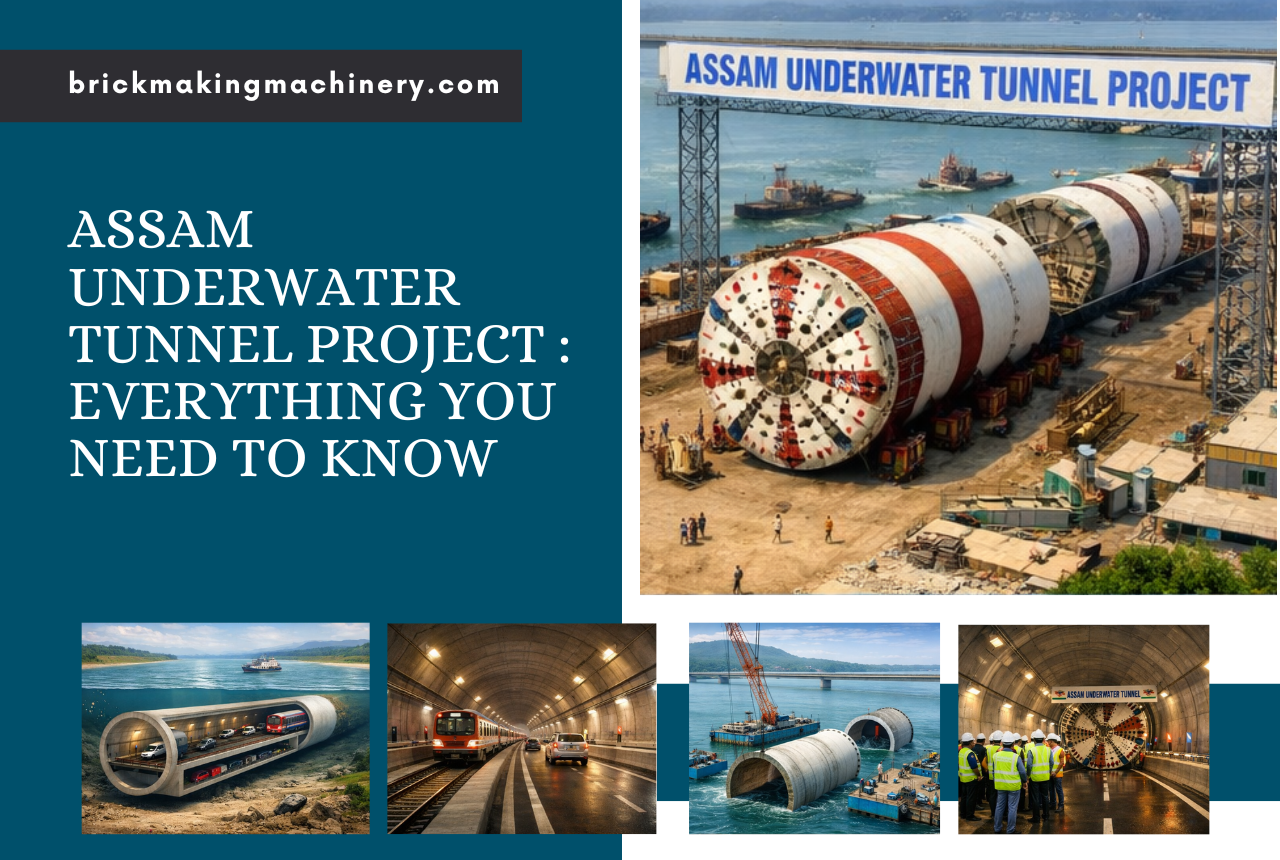
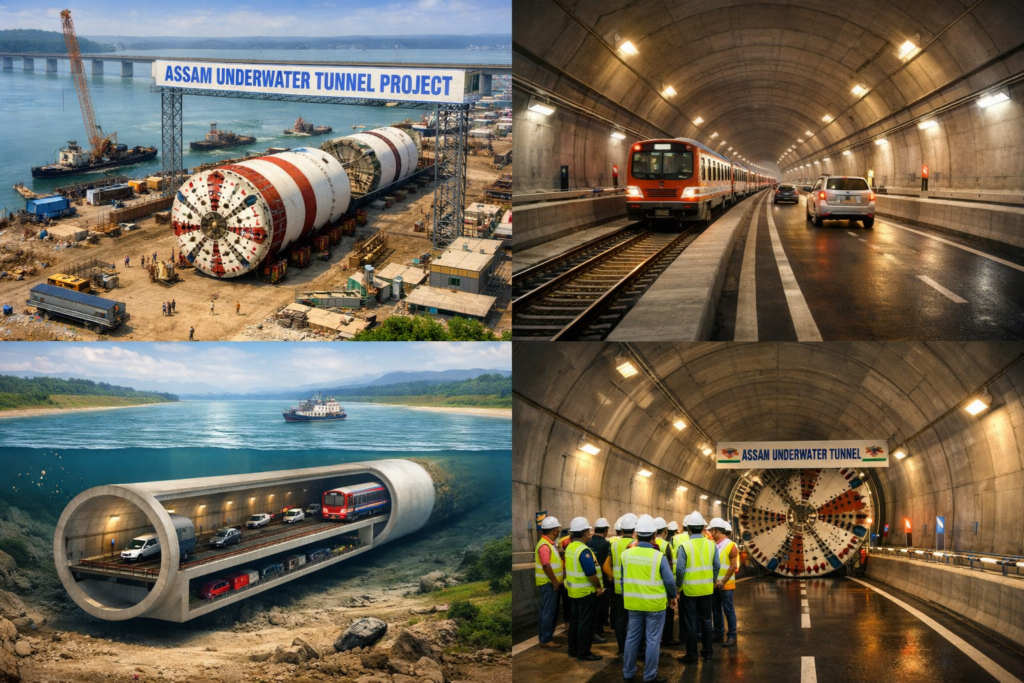
India is on the brink of achieving a historic infrastructure milestone with the country’s first underwater road tunnel beneath a major river. The Assam underwater tunnel project, connecting Numaligarh and Gohpur under the mighty Brahmaputra River, represents a transformative leap in transportation infrastructure for Northeast India.
Construction of the proposed 4-lane underwater tunnel is expected to begin by the end of 2025, marking the start of one of India’s most ambitious civil engineering undertakings. This groundbreaking project will not only revolutionize connectivity in Assam but also set new benchmarks for underwater tunnel construction technology in India.
For construction equipment manufacturers and infrastructure stakeholders, this project opens up unprecedented opportunities in advanced machinery deployment, specialized construction materials, and innovative engineering solutions that will shape the future of India’s infrastructure landscape.
Understanding the Assam Underwater Tunnel Project
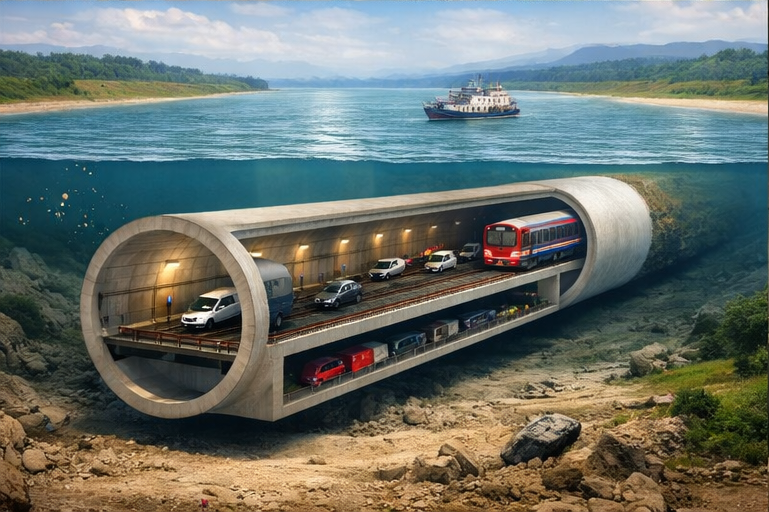
The underwater tunnel project represents a paradigm shift in how India approaches river crossings. Unlike traditional bridges that are vulnerable to weather conditions and restrict river navigation, this underground water tunnel will provide year-round reliable connectivity beneath the Brahmaputra.
The Detailed Project Report sets the tunnel length at 33.7 km, including the connecting roadway, with the tunnel’s crown lying about 32 metres below the Brahmaputra’s lowest bed level. This engineering specification ensures the tunnel remains safely below the river’s deepest points, even during monsoon season when water levels rise dramatically.
The project’s scope extends beyond just vehicular traffic. The 15.8 km twin-tube tunnel will form the core of the larger project, with one tunnel dedicated to rail movement featuring a single electrified track with ballastless design. This dual-purpose approach maximizes the infrastructure investment and provides comprehensive transportation solutions for the region.
Current Project Status and Timeline
The Assam underwater tunnel project has made significant progress through its planning and approval phases. Assam Chief Minister Himanta Biswa Sarma announced that the Detailed Project Report for the Gohpur-Numaligarh underwater tunnel project is nearing completion, bringing the project closer to its construction phase.
The project awaits Union Cabinet approval, with the Cabinet Committee on Infrastructure, chaired by the Prime Minister, set to give final clearance. Once approved, the National Highways and Infrastructure Development Corporation Limited (NHIDCL) will execute this landmark project.
NHIDCL Executive Director Pankaj Singh stated that work on the tunnel is likely to begin by the end of 2025 or the beginning of 2026, with the DPR preparation in its advanced stages. The project timeline includes comprehensive engineering investigations, environmental assessments, and contractor selection through a competitive tendering process.
The project is expected to be completed within five years of the award of work, subject to final approval by the Union Cabinet. This ambitious timeline reflects the government’s commitment to fast-tracking critical infrastructure projects in the Northeast region.
Project Cost and Investment Details
The financial investment in this underwater tunnel project underscores its strategic importance for India’s infrastructure development. Initial estimates placed the project cost at ₹6,000 crore, but recent assessments reflect the project’s expanded scope and technical complexity.
The ambitious project is estimated at Rs 6,000 crore and will take five years to construct, enhancing road connectivity and boosting strategic infrastructure near Arunachal Pradesh, which borders China. However, some reports suggest higher investment figures considering the comprehensive nature of the dual road-rail system.
This substantial investment will drive demand for specialized construction equipment, including tunnel boring machines, concrete manufacturing plants, waterproofing systems, and advanced monitoring technologies. For machinery manufacturers and suppliers, this represents a significant market opportunity in the Northeast region.
Strategic Importance and Benefits
The Assam underwater tunnel project carries immense strategic, economic, and environmental significance for the region. Its location connecting Numaligarh and Gohpur was carefully selected to maximize benefits across multiple dimensions.
Enhanced Connectivity
The tunnel will enhance national security by facilitating the transportation of defence personnel to Arunachal Pradesh, which borders China. This strategic advantage cannot be overstated, as improved logistics capabilities strengthen India’s border infrastructure and response capabilities.
Currently, traffic between the north and south banks of the Brahmaputra relies on the Koliabhomora Bridge, located approximately 100 kilometers from the proposed tunnel site. The new underwater tunnel will dramatically reduce travel distances and times, fostering economic integration between regions previously separated by the river’s formidable width.
Environmental Protection
The project will alleviate existing traffic congestion on NH-37, which is situated south of Kaziranga National Park and Tiger Reserve. By diverting traffic through the underground water tunnel, the project protects one of India’s most important wildlife habitats from increased vehicular pressure and associated environmental impacts.
The National Board for Wildlife has endorsed the project while requesting scientific studies on soil stability, groundwater, sediment patterns, and seismic impact. This environmental clearance process ensures the tunnel’s construction and operation meet stringent ecological standards.
Economic Development
The tunnel will unlock significant economic potential for the region by improving goods movement, reducing transportation costs, and enabling more efficient bulk cargo transfer. Industries in Numaligarh and surrounding areas will benefit from enhanced access to markets and raw materials.
Tourism development will receive a boost as travelers gain easier access to attractions on both sides of the Brahmaputra. The improved connectivity will also support agricultural sectors by facilitating faster transport of perishable goods to markets.
Engineering Challenges and Construction Technology
Building an underwater tunnel beneath the Brahmaputra River presents unique engineering challenges that require cutting-edge construction technology and expertise. The project team must address multiple technical considerations to ensure the tunnel’s structural integrity and long-term safety.
Geological Considerations
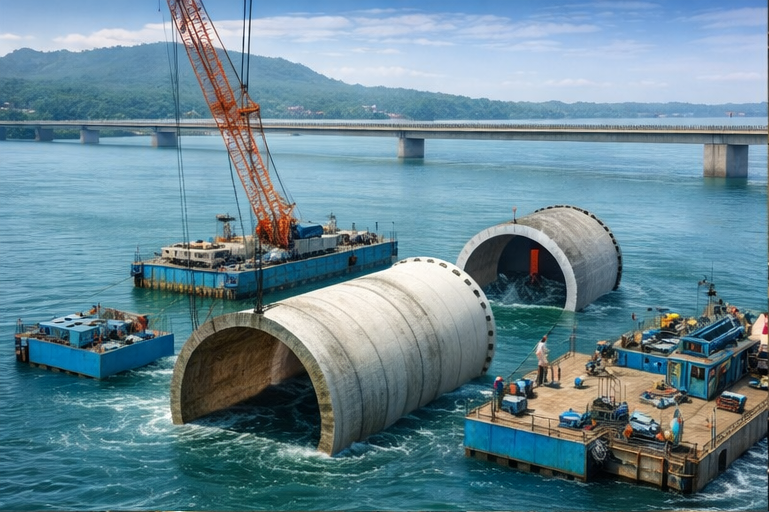
The Brahmaputra’s dynamic riverbed, characterized by significant sediment movement and seasonal water level fluctuations, demands careful engineering analysis. Immersed tube tunnels involve prefabricating tunnel sections on land, which are then floated to the construction site, submerged, and placed into a pre-dredged trench on the seabed. This construction method may be employed for portions of the Assam tunnel, depending on site-specific conditions.
Engineers must account for the river’s powerful currents, seismic activity in the region, and the interaction between tunnel structures and groundwater flows. Advanced geotechnical investigations provide critical data about subsurface conditions, helping designers optimize tunnel depth, alignment, and construction methodology.
Waterproofing and Pressure Management
Water pressure represents one of the most significant challenges, as structures must resist constant, intense external force, while even minor leaks can compromise long-term safety and integrity. The tunnel’s design incorporates multiple layers of waterproofing systems, including high-performance sealants, drainage systems, and continuous monitoring equipment.
Maintaining tunnel integrity 32 meters below the river’s lowest bed level requires sophisticated pressure management systems and redundant safety mechanisms. Construction crews will work in carefully controlled environments using advanced tunneling shields and support systems.
Construction Equipment Requirements
The project will necessitate deployment of specialized machinery and equipment, including:
- Tunnel boring machines (TBMs) designed for underwater conditions
- Concrete segment manufacturing facilities for tunnel lining
- High-capacity dewatering and pumping systems
- Advanced grouting equipment for ground stabilization
- Specialized waterproofing application machinery
- Real-time monitoring and surveying instruments
These equipment requirements create substantial opportunities for construction machinery suppliers and technical service providers throughout the project’s five-year construction period.
Comparison with Global Underwater Tunnel Projects
The Assam underwater tunnel project joins a select group of underwater tunneling achievements worldwide. Understanding how it compares to international projects provides context for its significance and technical ambition.
The Channel Tunnel connecting England and France spans 50.45 kilometers, with 37.9 kilometers underwater, making it one of the longest underwater tunnels globally. While the Assam tunnel’s underwater section is considerably shorter, it faces unique challenges related to the Brahmaputra’s dynamic riverine environment.
The Seikan Tunnel in Japan, connecting Honshu and Hokkaido islands, descends 240 meters below sea level and required 24 years of construction. In contrast, India’s first underwater tunnel beneath a major river aims for completion within five years, reflecting advances in tunneling technology and project management practices.
The Marmaray Tunnel in Istanbul demonstrates successful implementation of immersed tube technology in seismically active regions, lessons that directly apply to the Assam project given Northeast India’s tectonic activity.
Impact on Northeast India’s Infrastructure Development
The underwater tunnel project represents more than just a transportation link—it symbolizes India’s commitment to developing comprehensive infrastructure in the Northeast region. The project’s completion will catalyze broader economic and social transformation.
Regional Connectivity Enhancement
The tunnel forms part of a larger strategy to integrate Northeast India more effectively with the rest of the country and neighboring nations. Improved road and rail connectivity through the underground water tunnel will reduce isolation of border areas and facilitate trade with Southeast Asian countries.
Combined with other infrastructure initiatives like the Guwahati Ring Road and elevated corridors, the tunnel creates an interconnected transportation network that supports regional growth and development.
Employment and Economic Opportunities
During construction, the project will generate thousands of direct and indirect employment opportunities for skilled workers, engineers, and support staff. Local businesses will benefit from increased economic activity associated with the construction phase.
Post-completion, the tunnel will enable new economic activities by reducing transportation costs and travel times. Industries considering establishment in the region will find improved logistics capabilities attractive for investment decisions.
Technology Transfer and Skill Development
Executing this complex underground water tunnel project will build indigenous capabilities in advanced tunneling technologies. Engineers and construction professionals working on the project will gain expertise transferable to future infrastructure projects across India.
Technical institutions in the Northeast can develop specialized training programs aligned with the skills required for tunnel construction, operation, and maintenance, creating long-term human resource advantages for the region.
Environmental Considerations and Sustainability
While infrastructure development often raises environmental concerns, the Assam underwater tunnel project incorporates multiple sustainability measures to minimize ecological impact.
Scientific studies on soil stability, groundwater, sediment patterns, and seismic impact form part of the comprehensive environmental assessment process. These studies ensure construction activities do not adversely affect the Brahmaputra’s ecosystem or surrounding habitats.
By routing traffic through the underground tunnel rather than surface bridges or expanded highways, the project reduces the footprint on sensitive areas like Kaziranga National Park. This underground approach protects wildlife corridors and maintains ecological connectivity.
Construction methodology will minimize sediment disturbance in the river, protecting aquatic life and maintaining water quality. Post-construction monitoring will track any environmental changes and implement corrective measures if needed.
Future Prospects and Expansion Possibilities
The successful completion of India’s first major river underwater tunnel will establish precedents for similar projects nationwide. India has numerous locations where underwater tunnels could provide superior transportation solutions compared to bridges or ferries.
The proposal builds on the government’s broader decision to pursue combined road-rail tunnels where feasible, with three such strategic corridors identified nationwide, including this Brahmaputra crossing. This policy framework suggests the Assam project represents the beginning of expanded underwater tunnel development across India.
Other major rivers like the Ganges, Godavari, and Krishna could potentially benefit from underwater tunnel crossings in strategic locations, particularly where bridges face constraints related to navigation clearances, environmental sensitivities, or extreme flood conditions.
The technology, expertise, and lessons learned from the Assam project will accelerate planning and execution of future underwater infrastructure, positioning India as a leader in advanced tunneling capabilities.
Role of Construction Equipment and Machinery
For stakeholders in the construction equipment industry, the Assam underwater tunnel project presents significant business opportunities and technical challenges. The project requires deployment of specialized machinery that combines reliability with advanced capabilities suited to underwater construction environments.
Tunnel Boring and Excavation Equipment
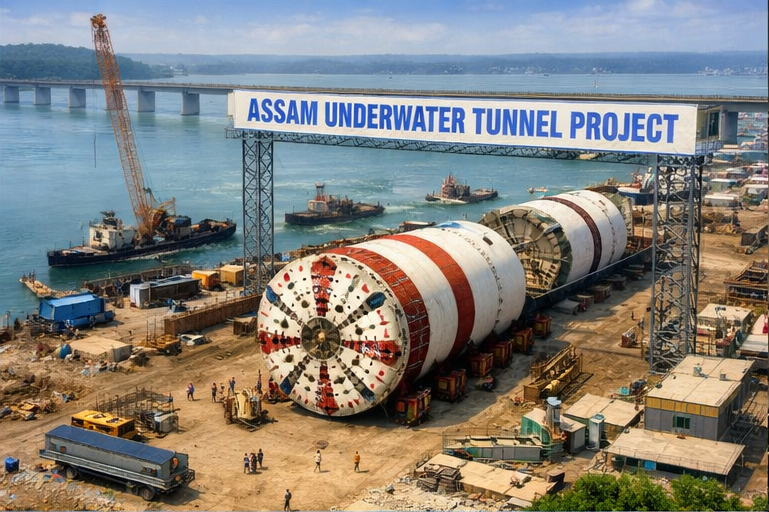
Modern tunnel boring machines represent the cutting edge of excavation technology. These sophisticated systems integrate rock cutting, segment erection, and muck removal in continuous operations. The Brahmaputra tunnel project will require TBMs specifically configured for the river’s geological conditions, with features addressing high water pressure and variable soil compositions.
Concrete Production and Placement Systems
High-volume concrete production facilities capable of meeting strict quality specifications will be essential for tunnel segment manufacture and in-situ concrete work. Specialized batching plants, mixing equipment, and placement systems must maintain consistent quality while operating on demanding schedules.
Waterproofing and Sealing Equipment
Advanced waterproofing application systems ensure comprehensive protection of tunnel structures. Spraying equipment, injection systems for chemical grouting, and segment gasket installation tools all contribute to creating watertight tunnel environments.
Monitoring and Safety Systems
Real-time monitoring equipment tracks structural performance, detects potential issues early, and ensures worker safety throughout construction. Sensor networks, data acquisition systems, and analysis software form integrated safety management platforms.
Engaging with India’s Infrastructure Future
The Assam underwater tunnel project represents a transformative moment in India’s infrastructure development story. For businesses involved in construction equipment, materials supply, engineering services, or related fields, this project offers opportunities to participate in a landmark achievement.
Stay Informed About Project Developments
Follow updates about the Assam underwater tunnel project through official channels and industry news sources. Understanding project timelines, technical specifications, and procurement processes positions your business to respond effectively to opportunities as they arise.
Explore Partnership Opportunities
Consider how your organization’s capabilities align with project requirements. Whether you manufacture tunneling equipment, provide engineering services, or supply specialized construction materials, identifying where you can add value helps you develop targeted business development strategies.
Invest in Technical Capabilities
The advanced nature of underwater tunnel construction may require upgrades to equipment, training programs for personnel, or development of new technical competencies. Forward-thinking companies invest now to be ready when opportunities materialize.
Connect with Project Stakeholders
Building relationships with NHIDCL, engineering consultants, and potential prime contractors establishes your presence in the stakeholder community. Attending industry conferences, participating in technical forums, and engaging with professional associations helps develop these crucial connections.
Engaging with India’s Infrastructure Future
The Assam underwater tunnel project represents a transformative moment in India’s infrastructure development story. For businesses involved in construction equipment, materials supply, engineering services, or related fields, this project offers opportunities to participate in a landmark achievement.